TX-E Devices Now Relay WiFi HaLow, Extending Long-Range Coverage Further Across a Property
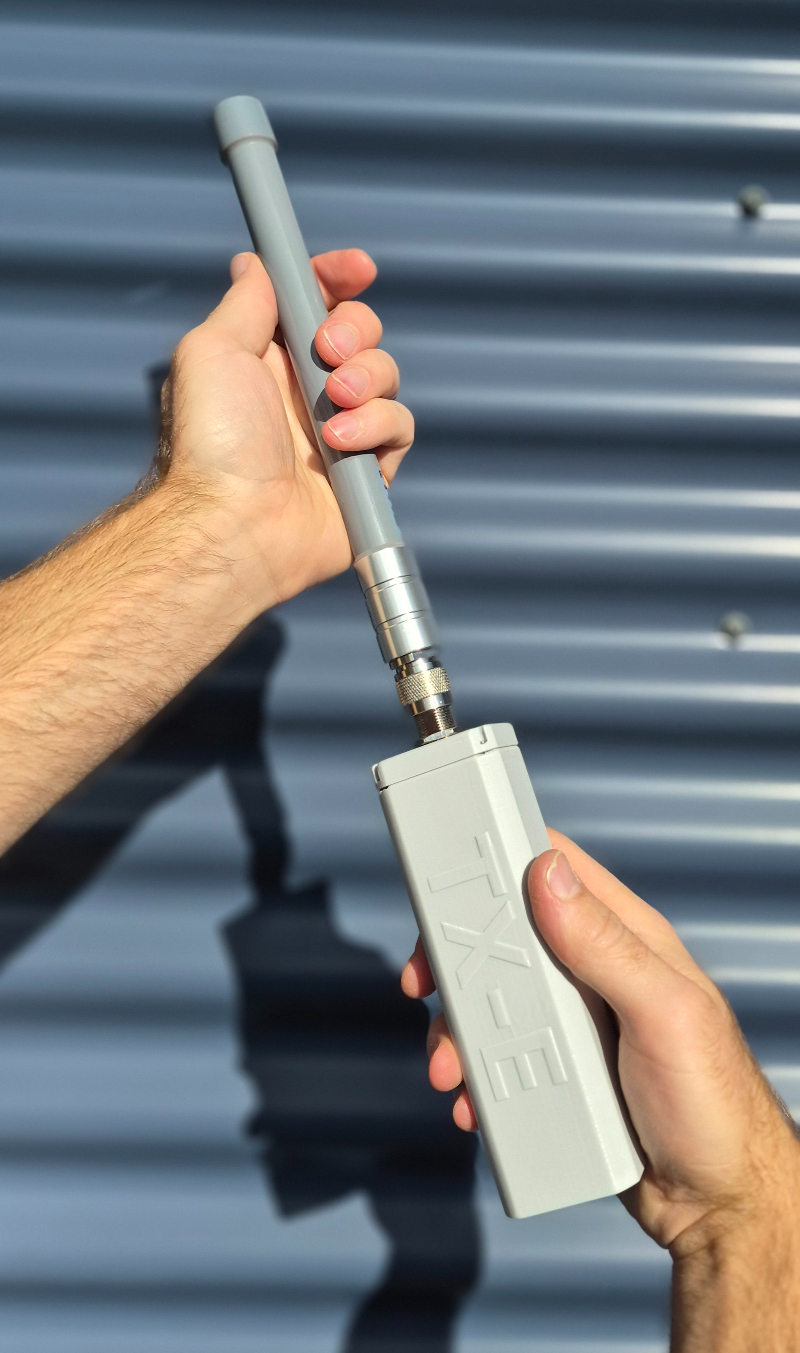
TX-E devices can now receive a WiFi HaLow signal and rebroadcast it as a second HaLow hop, letting a single long-range network reach further across a property or work around obstacles like hills and dense timber, without running new cable or adding a second internet connection. The Connect - Outdoor, purpose-built for low-power outdoor deployment, is the natural fit for the role: in relay mode it idles at just 0.25W, low enough to run indefinitely from a small off-the-shelf solar panel and battery.
Long-range WiFi has always had one hard limit: line of sight. A HaLow base station can push a signal well over a kilometre across open ground, but a rise in the paddock, a stand of trees, or the curve of the land itself can block a connection as effectively as distance does. Until now, working around that meant either accepting the dead zone or bringing in a second internet connection to power a standalone access point on the far side of the obstruction, an expensive and often impractical fix for a single shed or water pump.
Relay mode removes that requirement. A TX-E device can now sit partway across a property, pick up an existing HaLow signal, and rebroadcast it onward as a fresh HaLow hop, carrying the network past the obstacle and extending total coverage well beyond what a single base station can reach on its own.
How WiFi HaLow Relay Mode Works
Relay mode adds a third role to the dual-mode operation TX-E devices already support. Where a device previously either broadcast HaLow from a home internet connection or converted an incoming HaLow signal to a local 2.4 GHz hotspot, it can now do both at once: take in a HaLow signal on one radio and send it back out as HaLow on the other, chaining coverage from point to point.
In practice, this means a property with terrain that blocks a direct line from the house to the far paddock no longer needs a second internet connection just to bridge the gap. A relay device mounted at a high point in between, on a hill, a shed roof, or a tall post, picks up the signal from the base station and carries it through to the other side. No additional internet plan, no rewiring of the existing setup.
Configuration works the same way as the rest of the TX-E range: a browser-based setup tool over USB, with no networking knowledge required. For background on how TX-E devices fit into a broader property network, see Understanding Farm Connectivity Layers.
Why Connect - Outdoor Is Built for Long-Range Relay Deployment
A relay point is rarely near the house. It's typically the device with the least convenient access to mains power on the whole property: up on a ridge, out past the last shed, or wherever the obstruction happens to be. That makes power draw the deciding factor in whether a solar-powered relay deployment is practical at all.
In relay mode, Connect - Outdoor draws just 0.25W at idle, even with both a HaLow uplink and a HaLow downlink running simultaneously, and 2.25W under active transmission. That idle figure is a substantial drop from a standard single-mode deployment, and it's what makes relay mode realistic to run on solar in the first place. A device sitting on a ridge or fence line spends most of its time idle, so the lower the idle draw, the smaller the panel and battery needed to keep it running through the year. Combined with a weatherproof ASA enclosure rated from -20°C to +75°C, it's designed to be mounted permanently in exposed rural conditions and left alone. See How to Deploy Solar-Powered WiFi Networks for Remote Agricultural Sensors for sizing guidance.
For farmers weighing up how to extend WiFi to a far paddock, a second dwelling, or a monitoring site with no mains power nearby, this changes the economics considerably. Instead of trenching power or running cable to a relay point, a Connect - Outdoor unit and a modest solar setup can be deployed for a fraction of the cost, often in an afternoon.
Where WiFi HaLow Relay Mode Fits
Relay mode is most useful wherever a single base station's line of sight runs out before the property does:
Hills and ridgelines that block a direct signal path between the homestead and a far paddock
Multi-stage properties where coverage needs to reach well past the 1.5 km range of a single Connect - Outdoor base station
Dense timber or built structures that would otherwise sit in a permanent WiFi dead zone
Because each relay hop is just another Connect - Outdoor unit, extending a long-range network further is a matter of adding another purpose-built, solar-capable device at the next point along the property, not redesigning the network from scratch.
Relay mode is available now as a firmware update for existing Connect - Outdoor units, and ships enabled by default on new orders.
TX-E long-range WiFi HaLow products are available at tx-e.com.au/shop.